Man is the number one danger to polar bears.
For years the Inuit people have hunted bears for food and their fur.
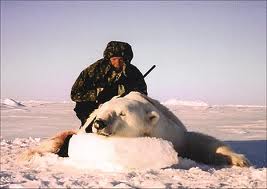
In some cultures killing a polar bear was a demonstration of bravery. Before the invention of the rifle, one had to get close to a bear and do battle to kill one.
After the rifle was invented, trophy hunting became popular.
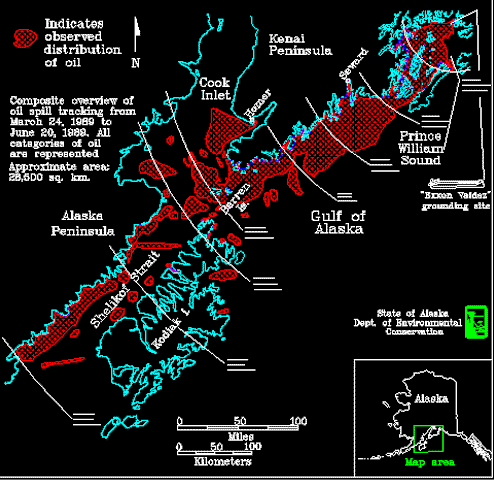
Oil spills in the Arctic Ocean have harmed bears and/or their prey which in turn harms them! An article dated 4/23/11 in the Winston Salem Journal, warns that a spill in the Arctic could be much more serious than the spill in the Gulf. While drilling and spills have gone on in the Gulf for many years, such is not the case for the Arctic. The Journal refers to the water as "pristine." Though the response to the Gulf Oil Spill was imediate, massive and ongoing, this would not be the case for such a spill in the Arctic. The environmental damage to such an area could be deveastating. Worse, the response to such a tragedy could be seriously hampered by the remoteness and harshness of the area. The devestation would be enormous, affecting the nature and wildlife including polar bears. Click here for the full article: http://www2.journalnow.com/news/2011/apr/23/wsobit01-gulf-spill-chills-arctic-ar-972094/
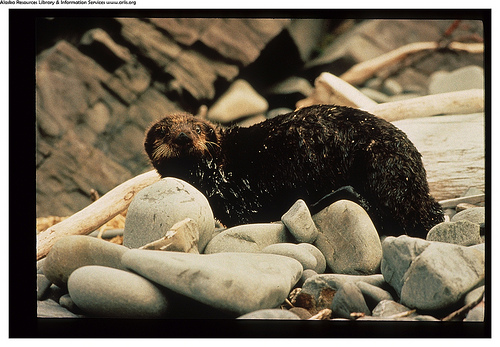
The Exxon Valdez oil spill of 1989 in Prince William Sound contaminated 1,990 kilometers of shoreline and almost instantly killed more than 2,300 sea otters and seals. Additionally, more than 250,000 sea birds died within days of the spill. It is more than a decade since this spill and a significant amout of oil still exists! Because the oil settled into areas that were not affected by weathering of waves, light and bacteria, the oil has continued to negatively affect the habitats of small animals which are food sources for larger animals and thereby negatively affect those animals as well. The fear is that it could continue for another thirty years! It is impossible to predict at this time, what the total devastation will be. To see the full report, click here:http://www.scientificamerican.com/article.cfm?id=environmental-effects-of.
Global warming is another threat. The average temperature on Earth rose almost one degree farenheit over the last 100 years. This may sound insignificant but that one degree is already being blamed for the melting of the ice cap. If our planet contiues to warm up, the longer ice-free period would reduce the hunting season for bears who depend on the ice for hunting. Global waming is responsible for:
- Population sizes decreasing
- Sea ice platforms moving farther apart and swimming conditions more dangerous
- Fewer hunting opportunities and increased scarcity of food
As climate change melts sea ice, the U.S. Geological Survey projects that two thirds of polar bears will disappear by 2050. This dramatic decline in the polar bear is occurring in our lifetime, which is but a miniscule fraction of the time polar bears have roamed the vast Arctic seas.
Rapid Arctic ice melting in 2007:
- Caused a record low for the surface area of summer sea ice in the Arctic Ocean, nearly 23 percent below the previous record low in 2005.
- Melted an additional area equivalent to the size of Alaska and Texas, combined (compared to average sea ice conditions).
- Exceeded the projections of most climate-ice models. Based on the rapid melt, one NASA scientist projected summer ice could be essentially gone as early as 2012.
http://www.nwf.org/Global-Warming/Effects-on-Wildlife-and-Habitat/Polar-Bears.aspx
When there is little or no ice, polar bears have no choice but to search out the ice or live on land. When this happens, they become a nuisance to man as they search populated areas for an alternate food source.
 Polar bears do not typically seek out people or populated areas. It is only when their natural resources are not available to them, that they enter areas inhabited by people in search of food. Churchill, Manitoba is the Polar Bear capital of the world. Only two towns-people have been killed by polar bears since 1717. In both cases, the bear was needlessly provoked. When bears wandered into town, they were shot becasue they were considered dangerous. Around the time of WWII the bears were killed and shipped home as trophys by the servicemen stationed at the nearby airport. Conservation efforts and a bear alert program have reduced the number of bear - human encounters. For details on how the alert program works, watch this video:
Another threat to the polar bear habitat is mounting pressure to allow oil and gas extraction in the Arctic. Not only would this harm the habitat but would bring human activity to these places which may also significantly impact the polar bear on many levels.
Pollution is also a threat. Researchers have found elevated levels of dangerous chemicals in samples of polar bear blood. These chemicals include PCBs, pesticides and dangerous metals!
A study published in the WS Journal on 1/13/12 alerts us to other threats: methane and soot. The article indicates that while carbon dioxide is a major threat to the environment, reducing methane and soot offer quicker fixes. Soot is a problem because it alters rainfall patterns. Methane comes from landfills, local mines, cookstoves, diesel engines and manure from farm animals. Scientists have made carbon dioxide their focus for years but there aren't any quick fixes there. Now scientists believe that there are quick fixes to the methane and soot problems that if applied globally, global warming could be reduced by nearly 1 degrees by 2050. To see the full artical, click here: http://www2.journalnow.com/news/2012/jan/13/wsnat02-study-suggests-shift-in-focus-on-warming-ar-1809395/

